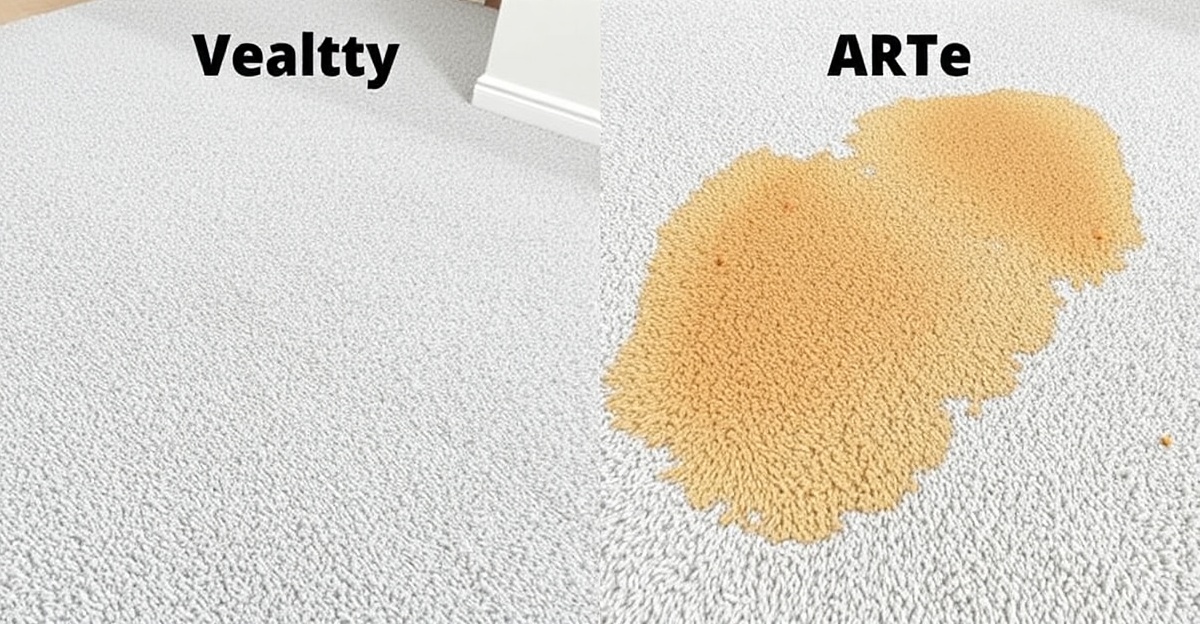
Understanding Dye Bleed
Dye bleed is one of the most frustrating carpet problems homeowners and property managers face. Unlike regular spills or stains, dye bleed occurs when unwanted color migration spreads through carpet fibers, creating a diffused, often permanent-looking discoloration.
What Causes Dye Bleed?
Dye bleed typically occurs when:
- Wet dye transfers from clothing or materials onto carpet fibers
- Spilled colored liquids (wine, juice, ink) seep into fibers
- New colored items bleed in high-humidity environments
- Improper cleaning methods force dyes deeper into fibers
Key Characteristics of Dye Bleed
Appearance:
- Soft, feathered edges (not sharp like a typical stain)
- Color spreads outward from the origin point
- Often affects a larger area than the original spill
- May appear in multiple shades of the same color
Behavior:
- Doesn’t respond to standard carpet cleaning
- May worsen with water-based cleaning attempts
- Embedded in carpet fibers, not on the surface
How to Tell it Apart
Regular Stain vs. Dye Bleed:
- Regular stains sit on the surface with defined edges
- Dye bleed permeates fibers with soft, gradual transitions
- Stains may respond to cleaning; dye bleed requires professional color correction
Bleach Spots vs. Dye Bleed:
- Bleach spots appear as lighter, pale areas
- Dye bleed appears as darker, colored areas
- Bleach damage removes color; dye bleed adds unwanted color
When to Call a Professional
You need professional dye bleed removal if:
- The affected area is larger than 2-3 square feet
- Home cleaning attempts have failed
- The dye bleed is a vibrant color (red, wine, ink)
- It’s affecting expensive or specialty carpet
Our team at CarpetPro Restoration specializes in identifying and treating dye bleed with precision techniques that restore your carpet without damaging fibers. We match the original color perfectly and ensure seamless blending with surrounding areas.
Contact us today for a free assessment of your carpet dye bleed issue.